*By completing this form you are signing up to receive our emails and can unsubscribe at any time.
©2026 United World Wrestling

In the second part of the Indian Wrestling at the Asian Games, a look at the performance of India from 1990 to 2022.
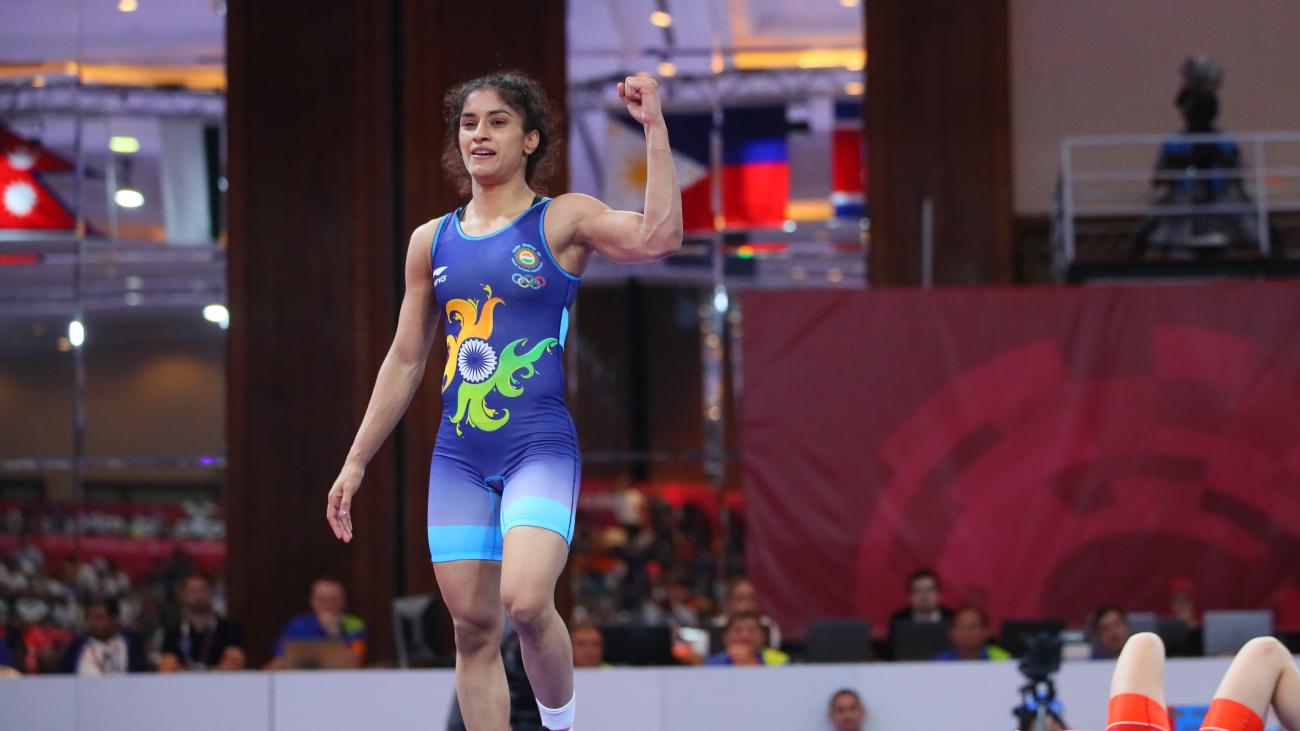
AICHI-NAGOYA, Japan (September 28) -- Read Part 1 of Indian Wrestling at Asian Games here
Indian wrestling in general, and its heavyweight wrestling in particular, suffered a sharp decline that deepened through the 1990s. Kaliraman, Chandgi Ram’s son, attributes this to a variety of reasons.
“After the breakup of the Soviet Union, a number of former USSR republics where the wrestling tradition was strong came into the Asian Games fold. Increased competition meant fewer medal opportunities. Wrestling itself was changing, becoming increasingly fast-paced and putting the traditional Indian style, which favours stamina and strength over speed, at a disadvantage,” he adds.
The Central Asian republics arrived at Hiroshima in 1994, where debutant Kazakhstan alone won three golds. India came home from that edition, and the next in Bangkok, without a single wrestling medal.
After Subhash VERMA’s 100kg Freestyle bronze in 1990, Palwinder Singh CHEEMA (Sukhchain Singh Cheema’s son) finished third in the Freestyle 120kg FS in 2002 and 2006. Mausam KHATRI's 96kg Freestyle bronze in 2010 was the last time an Indian men’s heavyweight stood on the podium.
“Speaking specifically of the decline of heavyweight wrestling, a lot of money came into dangal kushti (Indian-style mud wrestling competitions)," Jagdish Kaliraman says. "There was name and fame back in the day as well, but the money now, especially for the bigger wrestlers, is obscene. Yes, an international medal still matters, and the prestige and government rewards are there, but it’s not the be-all and end-all for the heavyweight wrestler."
Dangal wrestling exists outside the control of federations, organised mostly by independent village- and town-level committees.
Indian wrestling’s revival in the 2000s is overwhelmingly the story of lighter-weight exponents and women. Investment, foreign coaches and government patronage have frequently been cited as reasons, while success too has fed more success.
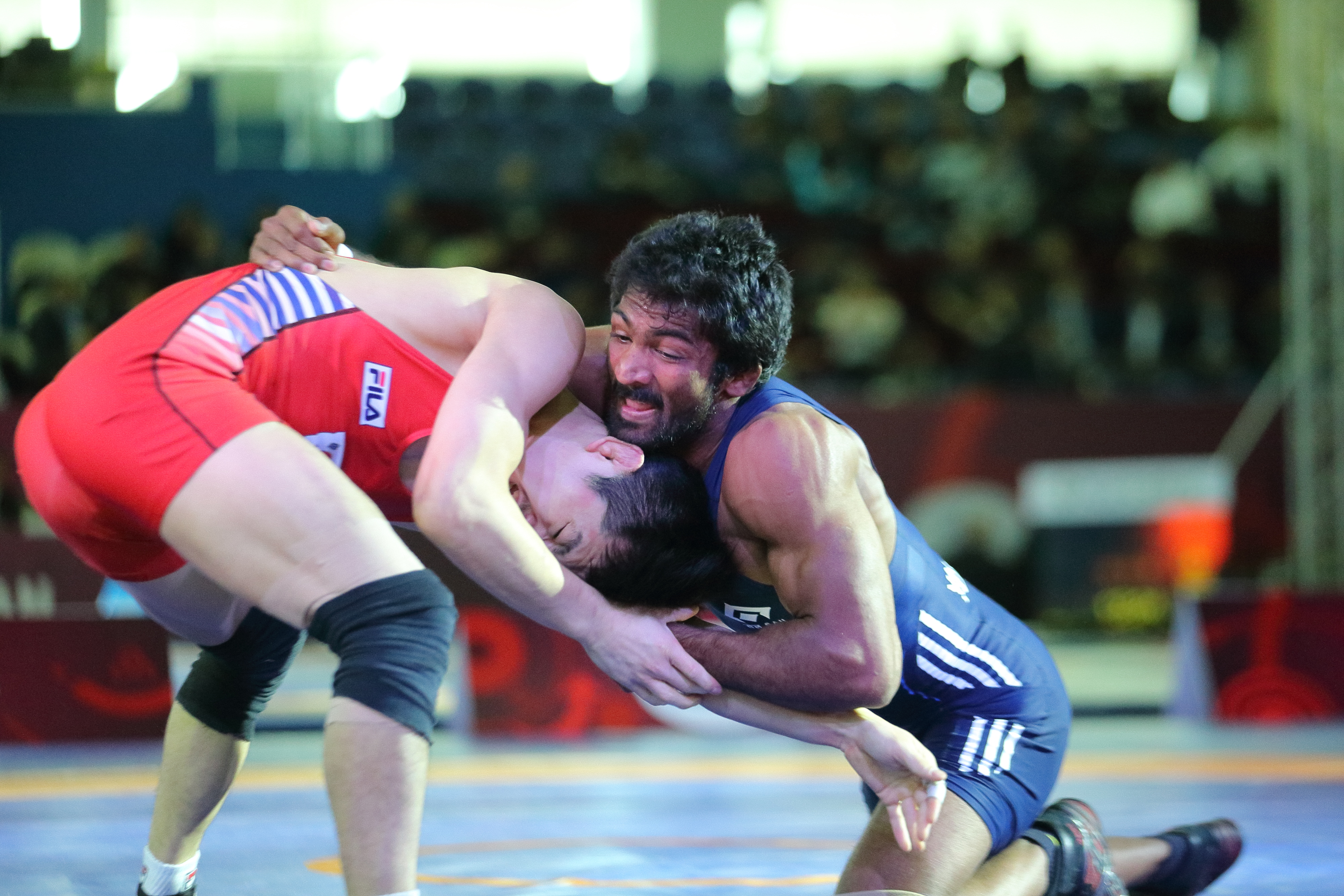
On the men’s side, Sushil KUAMR (IND) and Yogeshwar DUTT (IND) relit the fire in 2006 with bronze medals. Dutt would end India’s long wait for gold by winning the 65kg Freestyle competition in 2014 in Incheon. At the same Games, his protege Bajrang PUNIA (IND) won the 61kg silver, adding to his growing reputation. He would emulate Dutt four years later with the 65kg gold in Jakarta.
On the women’s side, the change in societal attitudes has been one of the main catalysts. A Venn diagram of Indian wrestling’s traditional strongholds and the areas where women’s rights have historically faced the strictest restrictions would overlap neatly.
Women in these parts were – and in many cases still are – confined to the perimeter of the house and had to cover their faces behind purdah when stepping out. For a woman to put on a singlet and step onto the wrestling mat for combat, in the public gaze, was unthinkable, and could invite not just censure but real, physical danger from a disapproving society.
This attitudinal change needed the right circumstances, opportunity and a reformer – not from outside but from within – who had enough social capital to win support and withstand the backlash.
The conditions were right in the 1990s. India was opening up following the economic liberalisation of 1991, and women were entering the workforce in great numbers. Economic opportunities meant a greater thrust on women’s education, even in semi-rural and rural areas, ensuring they were stepping out of the proverbial four walls that had confined them for centuries.
From a women’s sports perspective specifically, the motivation came from the legendary athlete PT USHA. Her near miss in the 400m hurdles at the 1984 Olympics catapulted her into the national consciousness, and with her four gold medals at the 1986 Seoul Games, she became the biggest female sports star in India. Her fame exposed girls and their parents across the country to new possibilities.
In a happy coincidence, around the time Usha was sprinting her way to glory, United World Wrestling [then FILA] recognised Women’s Wrestling (1984) and organised the first women’s World Championships (1987).
In 1997, India hosted its first women’s National Championship in Hyderabad. The big incentive came in 2001, when Women’s Wrestling was officially added to the programme for the 2004 Athens Olympics.
The stars had aligned, but society, burdened with centuries of inertia, still needed a reformer to precipitate the change. Chandgi Ram, now around 60, girded his loins for the biggest fight of his life.
“When the 1997 national championships took place, few of the girls who competed had a wrestling background. Judokas and kabaddi players came and won. No parents would allow their girls to wrestle,” Kaliraman says. “My father said it needed to change. He opened the doors of his akhara in Delhi to girls. He was the first wrestling guru to do so."
But throwing open the akhara to girls was one thing. Getting parents to send their daughters there proved far more challenging. To signal intent, Chandgi Ram put his money where his mouth was. He encouraged his daughters – Sonika and Deepika Kaliraman – to take up wrestling and train at his akhara.
He would take them to dangals in rural Haryana, where people thronged, drawn by Chandgi Ram’s fame, by the curiosity of girls wrestling, and, perversely, by revulsion at it. Chandgi Ram had stirred a hornet’s nest.
“This is a society where if a woman’s pallu (the end of the sari that covers the head) slips by even an inch, it becomes a scandal,” Tejpal Dalal, wrestling historian, says. “And it’s in this society that Masterji was taking his daughters to compete and encouraging other people to do the same.”
Many were sympathetic but hesitant. Many more were outraged.
“On occasion, Masterji would have curses and abuses and rocks hurled at him, but he soldiered on,” Dalal adds.
Kaliraman says it was then that his father called up his disciples, including Mahavir Singh PHOGAT, and asked them to follow his lead. Phogat agreed.
It changed the face of women’s wrestling in India. His daughters, GEETA and BABITA, became Commonwealth Games champions, and Phogat became the subject of a blockbuster biopic, Dangal (2016). Chandgi Ram’s own films in the 1970s might have bombed at the box office, but a film he indirectly inspired became the highest-grossing Indian film of all time worldwide.
Phogat’s niece VINESH (IND) picked up where Geeta and Babita left off. Her bronze medal at the 2014 Asian Games was a precursor of things to come; she went on to win gold in 2018 in Jakarta.
India would match its six-medal haul from 2006 Doha with six medals in Hangzhou 2022 (held in 2023). Deepak PUNIA (IND) fell short in the 86kg final while AMAN (IND), who later won bronze at the 2024 Paris Olympics, won bronze at 57kg.
For the first time, three women wrestlers won medals with ANTIM (IND), SONAM (IND) and KIRAN (IND) finishing third. Sunil KUMAR (IND) brought home a bronze medal in Greco-Roman, a feat not achieved since the 2010 Guangzhou edition.
Medal figures are as of the start of the 2026 Games.
1951, New Delhi: No wrestling program.
1954, Manila: 2 medals (0 gold, 1 silver, 1 bronze). Wrestling debuts at the Asian Games. Baburao KASHID wins silver at Freestyle 67kg; Sohan SINGH takes bronze at 79kg.
1958, Tokyo: India didn’t send wrestlers.
1962, Jakarta: 12 medals (3 gold, 6 silver, 3 bronze). India’s best-ever haul. Greco-Roman is introduced. Maruti MANE wins Freestyle 97kg gold; Ganpat ANDALKAR wins +97kg Greco-Roman gold; Malwa SINGH wins 52kg gold.
1966, Bangkok: 6 medals (0 gold, 1 silver, 5 bronze). Freestyle only. Bishwanath SINGH takes 97kg silver; Bishamber SINGH wins bronze at 57kg.
1970, Bangkok: 5 medals (1 gold, 1 silver, 3 bronze). Chandgi RAM wins Freestyle 100kg gold; Jit SINGH takes 90kg silver.
1974, Tehran: 4 medals (0 gold, 0 silver, 4 bronze). Hosts Iran dominate. Sukhchain Singh CHEEMA wins bronze in both styles at 100 kg; a 19-year-old Satpal SINGH takes 82kg bronze.
1978, Bangkok: 3 medals (2 gold, 1 silver, 0 bronze). Iran absent. Rajinder SINGH (74kg) and Kartar SINGH (90kg) win gold; Satpal SINGH takes +100kg silver. India finishes second on the wrestling table behind Japan.
1982, New Delhi: 4 medals (1 gold, 1 silver, 2 bronze). Satpal SINGH wins Freestyle 100kg gold, a day after the hockey final defeat to Pakistan; Kartar SINGH takes 90kg silver.
1986, Seoul: 3 medals (1 gold, 0 silver, 2 bronze). Kartar SINGH wins his second gold, at 100kg Freestyle. India’s last wrestling gold for 28 years.
1990, Beijing: 2 medals (0 gold, 1 silver, 1 bronze). Ombir SINGH takes 48kg silver; Subhash VERMA wins 100kg bronze.
1994, Hiroshima: No medals. Former Soviet republics join the Games.
1998, Bangkok: No medals.
2002, Busan: 1 medal (0 gold, 0 silver, 1 bronze). Palwinder Singh CHEEMA wins 120kg bronze. Women’s Wrestling makes its Asian Games debut.
2006, Doha: 6 medals (0 gold, 1 silver, 5 bronze). Geetika JAKHAR's 63kg silver is India’s first Women’s Wrestling medal at the Games. Sushil KUMAR and Yogeshwar DUTT win bronze.
2010, Guangzhou: 3 medals (0 gold, 0 silver, 3 bronze). Mausam KHATRI's 96kg bronze is the last by an Indian men’s heavyweight.
2014, Incheon: 5 medals (1 gold, 1 silver, 3 bronze). Yogeshwar DUTT's 65kg gold ends the 28-year wait; BAJRANG takes 61kg silver; VINESH wins bronze at 48 kg.
2018, Jakarta: 3 medals (2 gold, 0 silver, 1 bronze). BAJRANG wins 65kg gold; VINESH's 50kg gold is India’s first in Women’s Wrestling.
2022, Hangzhou (held 2023): 6 medals (0 gold, 1 silver, 5 bronze). Deepak PUNIA takes 86kg silver. Bronzes for AMAN, ANTIM, SONAM, KIRAN and Sunil KUMAR (Greco-Roman)
Preview: New Era at Greco 130kg as Hedayati Debuts
21 October 2026
Preview: Japan Targets Women’s Wrestling Crown at World Championships
20 October 2026
Preview: Clash of Champions at World Championships
19 October 2026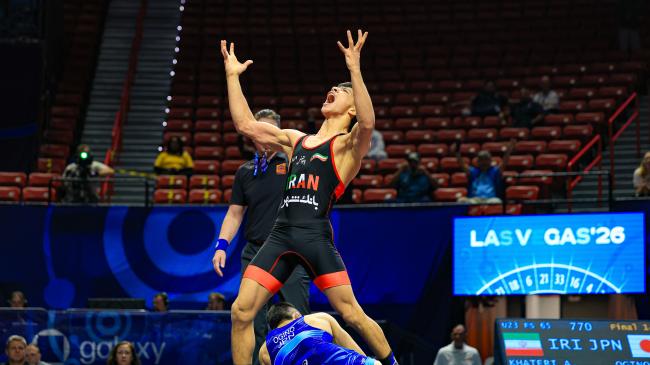
Khateri's Epic Comeback for Gold Seals Team Title for Iran
19 October 2026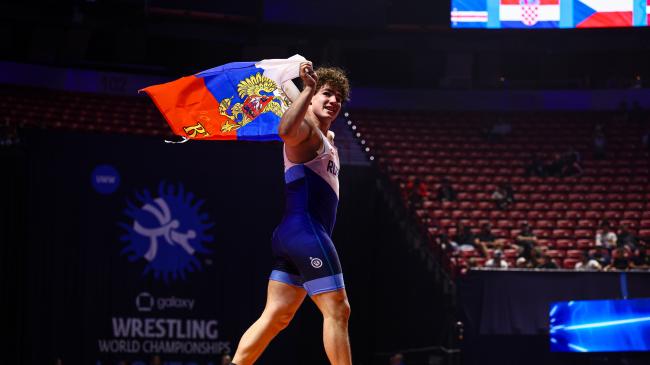
Russia, Iran Locked in Close Team Title Race at U23 World Championships
18 October 2026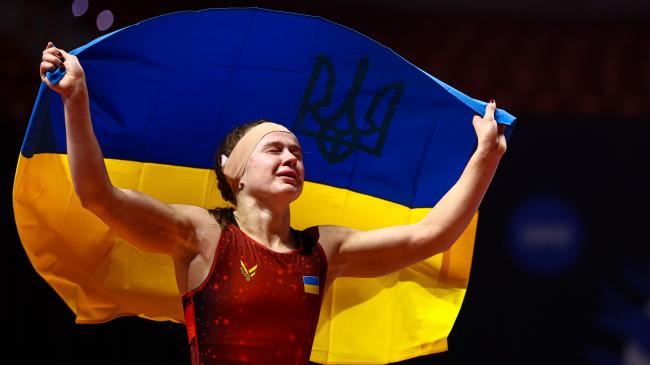
Bondar Wins Gold on Return as Ukraine Wins Team Title
17 October 2026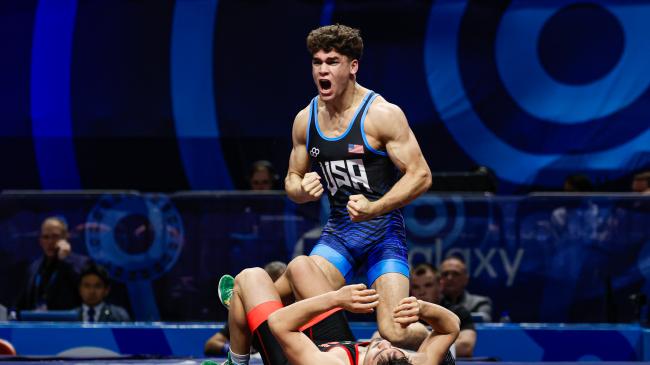
Baitukaev, James Set Up 74kg Final at U23 World Championships
17 October 2026
Terek Becomes Hungary's First Women's U23 World Champion
16 October 2026
WATCH: Nwachukwu's One-Handed Five-Point Move
15 October 2026
Alameldin Prevails Over Levai; Iran Wins Greco-Roman Team Title
15 October 2026