*By completing this form you are signing up to receive our emails and can unsubscribe at any time.
©2026 United World Wrestling

Part one of the UWW series about India's wrestling history at the Asian Games as its wrestlers prepare to take the mat in Aichi-Nagoya.
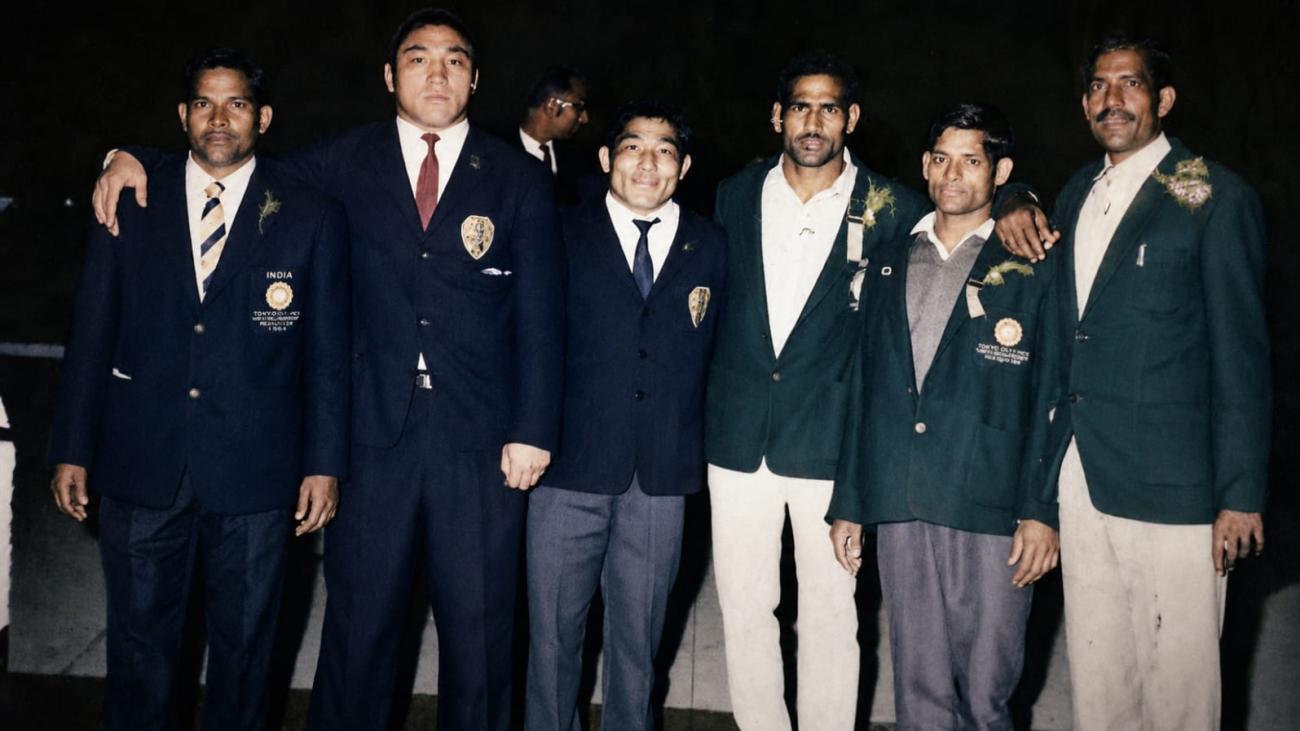
AICHI-NAGOYA, Japan (September 26) -- Going into the 20th Asian Games in Aichi-Nagoya, wrestling had yielded 65 medals for India -- 11 gold, 15 silver and 39 bronze -- making it the country’s third most successful sport at the continental event by total medals, trailing only athletics (283 medals) and shooting (80).
It’s a testimony to Indian wrestling’s deep foundations and resilience that it has flourished in a field that has historically been world class: a medal on the mat at the Asian Games can hold its own against any global event and, it could be argued, trails only the Olympics and World Championships in competition and prestige.
As India’s wrestlers prepare to take the mat in Nagoya, it’s an opportune moment to reflect on the redoubtable legacy they will be hoping to add to.
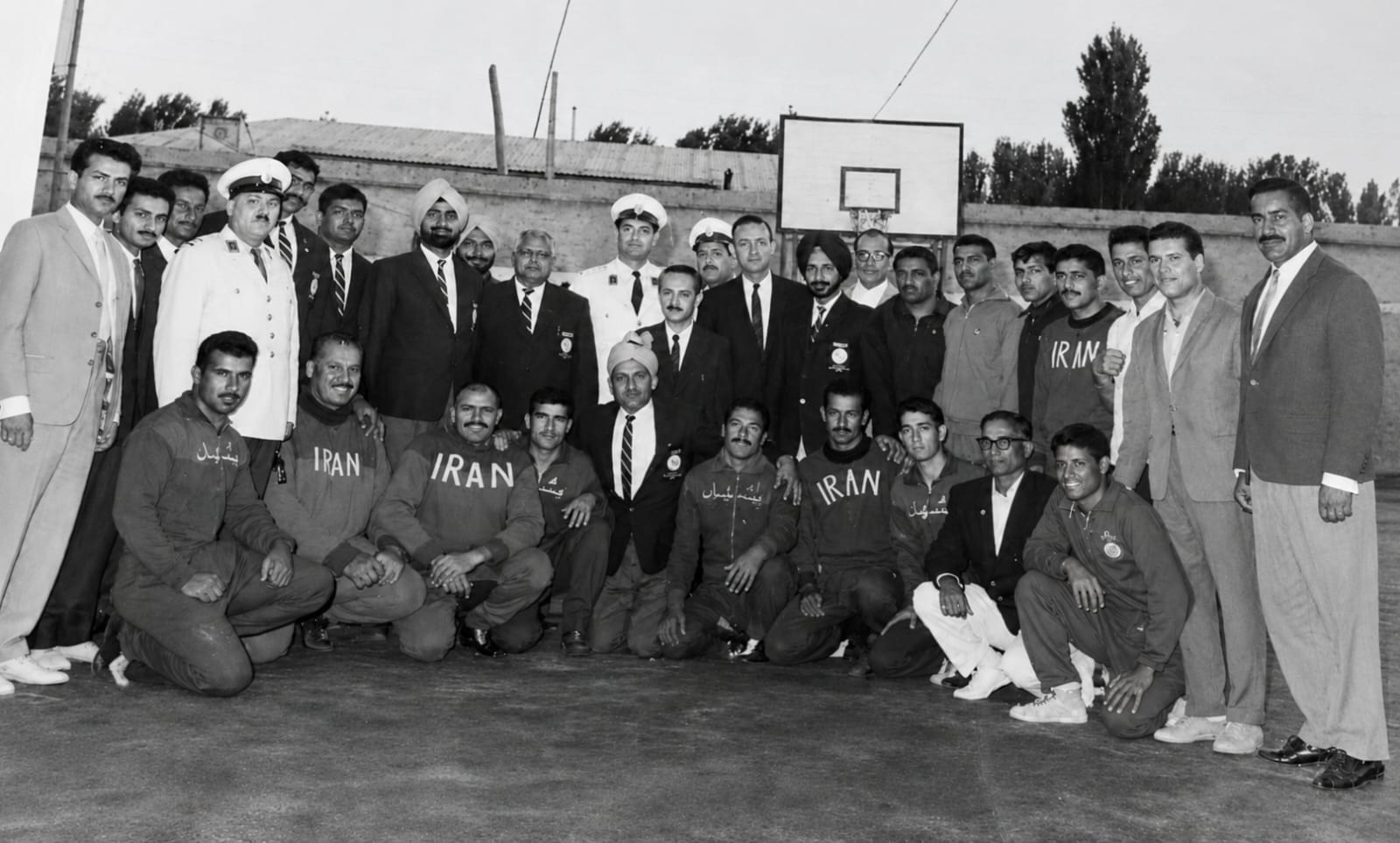 India and Iran wrestling teams. (Photo courtesy Dinesh Raghav, son of Bishamber Singh)
The story of Indian wrestling at the Asian Games is as much about events -- contemporary as well as historical -- off the mat as on it. You could begin in Manila in 1954, when the sport made its debut at the second edition of the Games. But you could go two years back, to Helsinki, where KD JADHAV (IND) won independent India’s first individual Olympic medal, a bronze, and injected in a fledgling nation the kind of primal self-confidence that only a wrestling achievement can.
But you could also draw a straight line to 1954 from the 17th century when, tradition holds, the Maratha king Shivaji ordered akharas (wrestling schools) to be opened across his realm. Those akharas were meant to produce strong, fighting-fit men who could instill fear in the enemy and project power – outwardly, and inwardly to his own subjects – as he jostled with the mighty Mughal Empire for supremacy in western India.
Modern iterations of those very akharas would play a significant role as wrestlers from the western Indian state of Maharashtra spearheaded the country’s performance on the mat. Starting with Baburao KASHID (IND), who won a silver medal in the 67kg freestyle category in Manila, to Shamrao SABLE’s (IND) 52kg bronze in 1966, wrestlers from the region won a big chunk of India’s medals over three editions (India didn’t send a wrestling contingent in 1958).
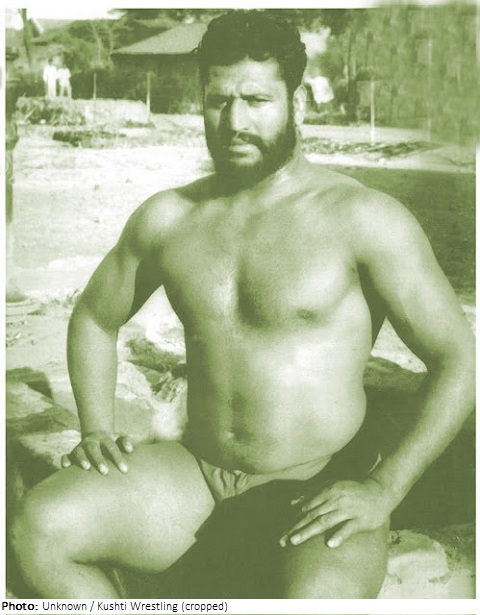
No one shone brighter in this span than Maruti MANE (IND), the Maharashtra stalwart who won 97kg freestyle gold and Greco-Roman silver in Jakarta in 1962. His Maharashtrian compatriot Ganpat ANDALKAR (IND) mirrored the feat in the +97kg category, winning the Greco-Roman gold and the Freestyle silver. India won a total of 12 medals at this edition, a high-water mark for the country at the continental event.
India benefitted from the introduction of Greco-Roman, which put more medals on offer, as well as from Iran sitting out the Games. But some argue that’s an unfair appraisal of a historic performance, not least because Japan, the continent’s other powerhouse, was in Jakarta and won 10 golds.
"Indeed Iran did not participate, but that doesn’t mean Indian wrestlers couldn’t have won otherwise. Indian wrestling’s depth and breadth was such that it would still have left its mark if the Iranians were there,” says Tejpal DALAL, wrestling historian and author.
“Indian wrestlers were strong as well as skillful and it showed. It wasn’t just the Maharashtra wrestlers who impressed. Malwa SINGH (IND) (52kg Greco-Roman gold medalist and Freestyle bronze medalist), Udey CHAND (IND) (70kg, two silver medals), Sajjan SINGH (87kg, two silver medals) and Lakshmikant PANDEY (IND) (78kg Freestyle silver) – medals came from all the traditional wrestling power centres."
The 1962 Games also heralded a golden period for India’s heavier weight categories. It has dried up now, but back in the day India seemed to have an inexhaustible pipeline of middle to heavyweight talent.
"You can say it started with Lilaram SANGWAN’s (IND) gold at the 1958 Commonwealth Games, but it really hit home in 1962 with Mane and Andalkar’s twin golds and silvers. Thereafter, the public would come to expect no less at every edition,” says Dalal.
Jagdish KALIRAMAN, whose father, Chandgi RAM (IND), was one of the legends of that gilded age of Indian heavyweight wrestling, says the gap between mat wrestling and mud wrestling, where Indians would cut their teeth, was not as big as it would later become.
“International wrestling was not as fast-paced back then, so mud wrestlers could adjust,” says Kaliraman, a former national champion himself.
Talent was in abundance, too, and it fuelled competition at home. It was an era of titanic battles that would become part of folklore. Kaliraman narrates one such contest.
“In 1966, Masterji and Maruti Mane faced off in Belgaum. I wasn’t born then, but they say the bout lasted three-and-a-half hours and they remained deadlocked.”
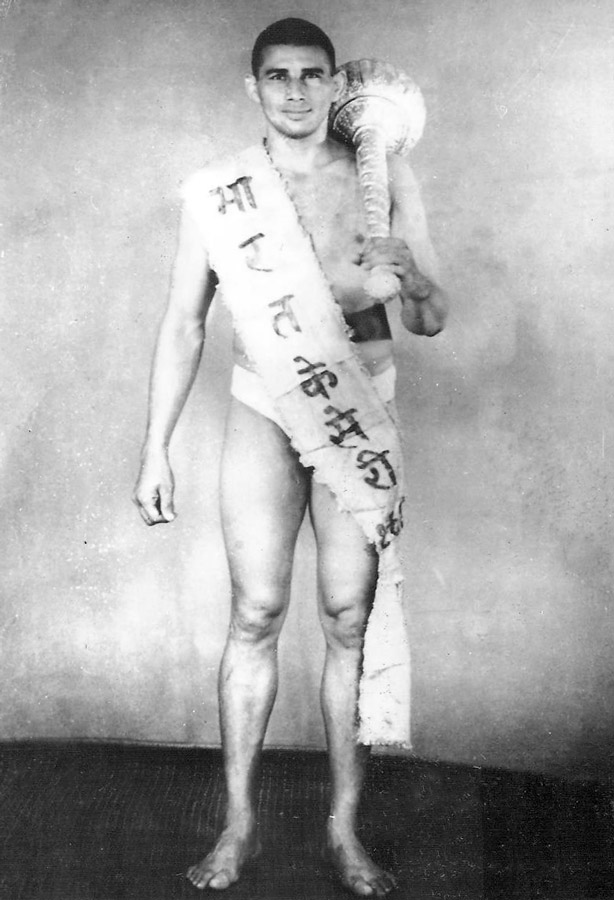
As they shook hands afterwards, this epic draw seemed a symbolic handoff too, for not long after, the pendulum of Indian wrestling shifted decisively north. It had been in the works for some time, led early on by Udey CHAND (IND) of Haryana, who won India’s first world championships medal -- a bronze in Freestyle 67kg category -- in 1961, and then by Bishamber SINGH (IND) from Uttar Pradesh, who won the Freestyle 57kg silver at the 1967 World Championships in New Delhi, having remained unbeaten and losing gold on points to the legendary Dagestani world champion Ali ALIEV (USR). The feat catapulted him into the national spotlight reserved for cricketers, hockey players and top track and field stars.
“They have forgotten him now,” says Dinesh RAGHAV, Bishamber’s son. “But back in the day he would be on national newspapers’ front pages alongside the likes of Nawab PATAUDI (the Indian cricket captain and the country’s then most popular sportsperson).
“Successive state governments still haven’t named a road after him, despite promising it years ago,” Raghav laments.
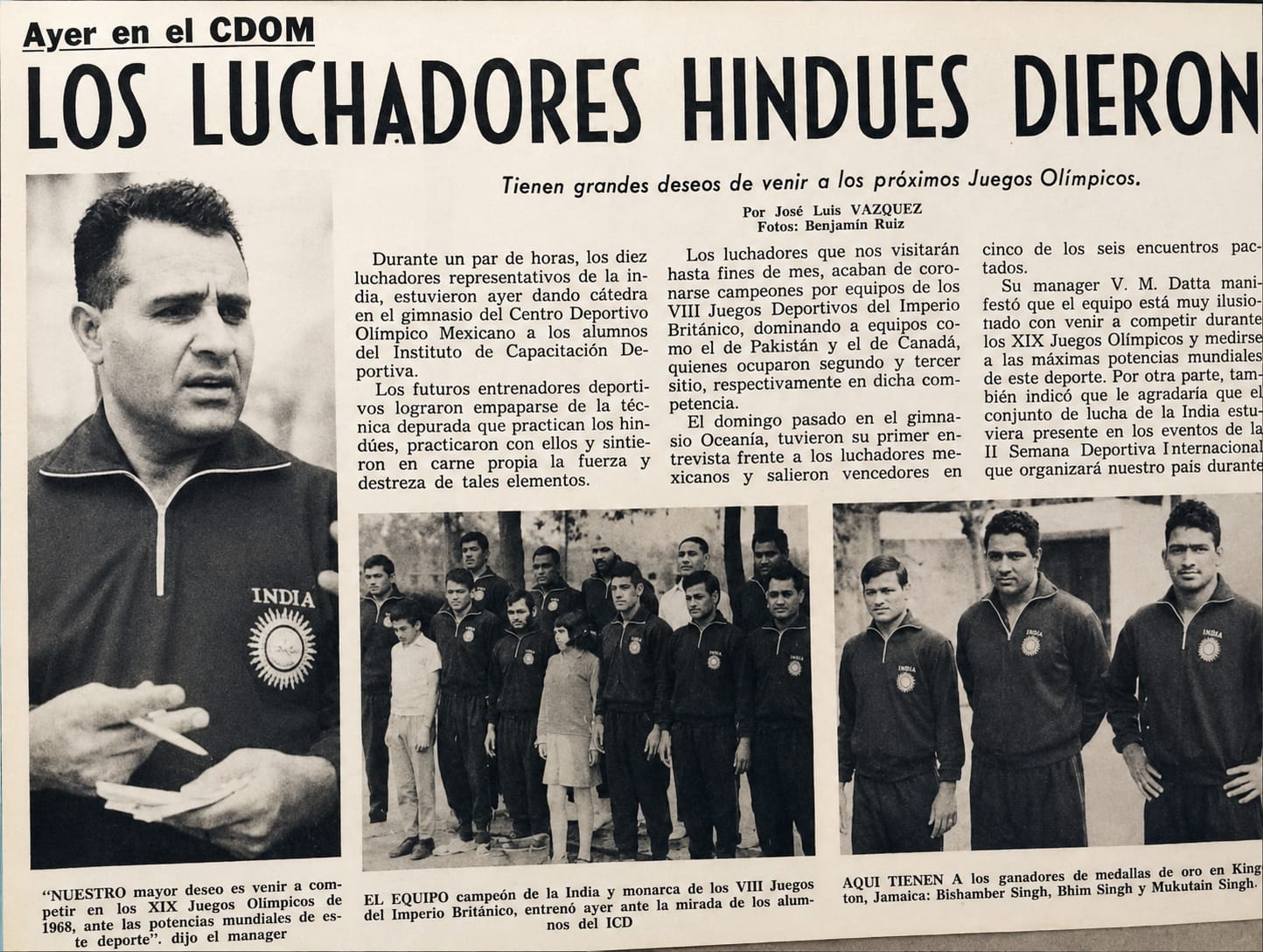
Bishamber’s World Championships exploits were an upgrade too on his performance at the 1966 Bangkok Asian Games, where he had won a bronze medal. India didn’t win any gold at that edition – Bishwanath SINGH’s (IND) 97kg silver in Freestyle was its best performance -- but the contingent did capture half a dozen medals.
The country would return to the top of the podium at the 1970 Asian Games, again in Bangkok, when Chandgi Ram prevailed in a competitive field to win the 100kg Freestyle gold. Chandgi Ram’s fame soared in the aftermath, to the extent that he landed a few lead roles in Hindi films. Chandgi Ram didn’t find success on the silver screen, and his wrestling career was all but over after the 1972 Munich Olympics, but his most significant contribution to Indian wrestling – and Bollywood – would come decades later.
We will circle back to this, but for now, let’s move to 1974, with Iran hosting the Asian Games in Tehran. In a competition that, led by the host country, was arguably the strongest yet, India’s wrestlers couldn’t get a whiff of gold. Punjab’s Sukhchain Singh CHEEMA (IND) won two bronze medals (Greco-Roman and Freestyle 100kg) -- a tally his son would match across two editions. A 19-year-old Satpal SINGH (IND) took bronze in Freestyle 82kg but, importantly, showed promise that would materialise eight years later in New Delhi.
With Iran sitting out the 1978 Asian Games, Indian wrestlers benefited again. A trifecta from Delhi’s fabled Guru Hanuman akhara stamped their authority in Bangkok and signalled a dominance that would continue for nearly a decade.
While Satpal upgraded to silver in the +100kg category, Kartar SINGH (IND) went a step further and took gold in Freestyle 90kg. Rajinder SINGH (IND), whom wrestling literature of the day describes as a master of fast moves and technique, conquered the 74kg category, giving India second place in the wrestling medals tally behind Japan.
Expectations were naturally high when India hosted the 1982 Asian Games in New Delhi. But by then Indian wrestling had begun to see the intrigue, infighting and high-handed officialdom that continue to stymie the country’s prospects.
"The politics, corruption and vindictiveness had begun to impact Indian wrestlers. Officials had become autocratic,” says Nakul PATODI, who publishes a long-running magazine on Indian wrestling from Indore.
In India, the 1982 edition is best remembered not for the gold medals the country won but for one it lost: the men’s hockey final, a 7-1 obliteration by archrival Pakistan on home soil – a humiliation to rank alongside Brazil’s Maracanazo at the 1950 FIFA World Cup, made worse by the fact that India and Pakistan were bitter enemies off the field as well. It’s said that Prime Minister Indira GANDHI, watching from the stands in the heart of Delhi, left before the final whistle.
In his scholarly book, “The Wrestler’s Body: Identity and Ideology in North India,” author and academic Joseph ALTER posits that historically in India, court wrestlers embodied their kings’ temporal power. In a modern context, the argument can be extended to other sports, with leaders in place of kings. The defeat to Pakistan in India’s national sport thus stung Prime Minister Gandhi all the more, coming as it did at a sporting extravaganza she had staged as much for sportspersons and the public as for her own image.
Wrestling would give her and the Indian public some solace the next day, when Satpal defeated Dashdorjiin TSERENTOGTOKH (MGL) in the 100kg final to give the country its only gold on the mat at the Asian Games.
Fellow Guru Hanuman disciple Kartar won silver in the 90kg category, as India finished with four medals. Kartar would win another gold -- his second at the Asian Games -- four years later, when he defeated Shahid Parviz BUTT (PAK) in the 100kg final in Seoul.
This would prove to be India's last Asian Games wrestling gold for 28 years.
Preview: New Era at Greco 130kg as Hedayati Debuts
21 October 2026
Preview: Japan Targets Women’s Wrestling Crown at World Championships
20 October 2026
Preview: Clash of Champions at World Championships
19 October 2026
Khateri's Epic Comeback for Gold Seals Team Title for Iran
19 October 2026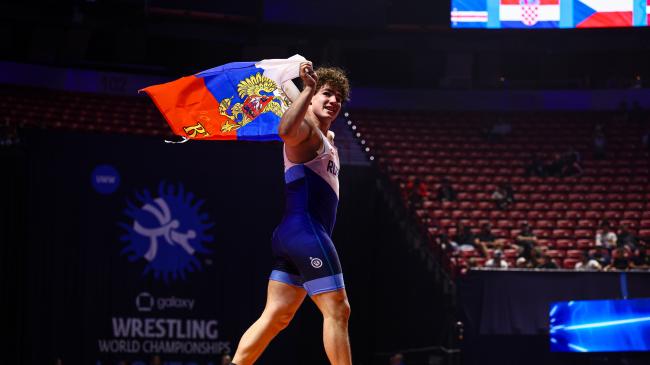
Russia, Iran Locked in Close Team Title Race at U23 World Championships
18 October 2026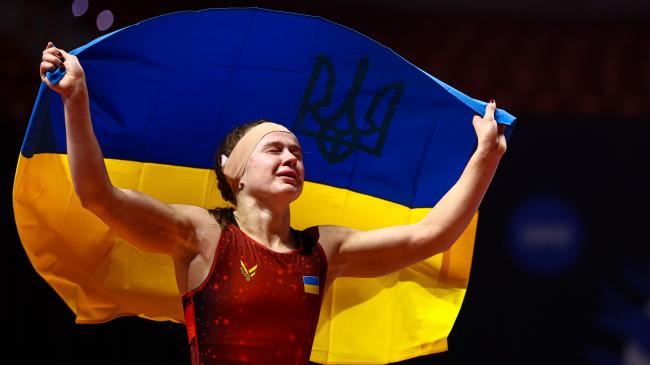
Bondar Wins Gold on Return as Ukraine Wins Team Title
17 October 2026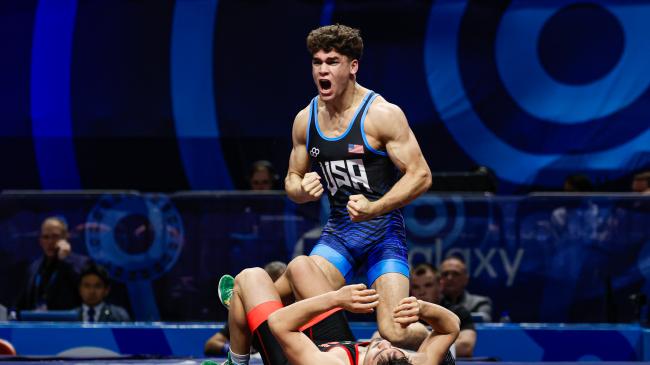
Baitukaev, James Set Up 74kg Final at U23 World Championships
17 October 2026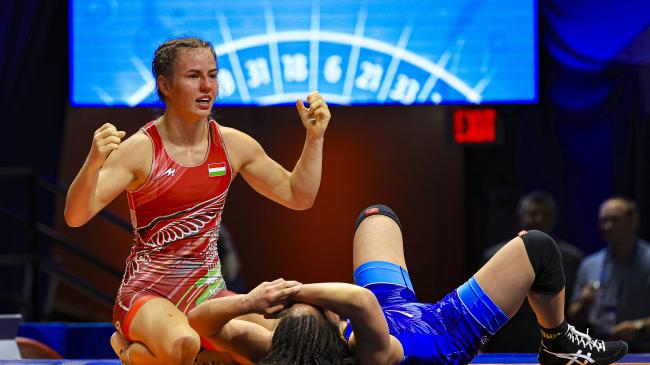
Terek Becomes Hungary's First Women's U23 World Champion
16 October 2026
WATCH: Nwachukwu's One-Handed Five-Point Move
15 October 2026
Alameldin Prevails Over Levai; Iran Wins Greco-Roman Team Title
15 October 2026